We've all seen it: a crumpled paper gamesheet, coffee-stained and barely legible, sitting on a scorer's table. The handwriting is impossible to read. Was that a goal for #17 or #11? Did the assist go to Smith or Smyth? By the time someone tries to enter the stats, half the information is guesswork.
Paper gamesheets have been the standard in hockey for decades, but they're also one of the biggest sources of errors, delays, and frustration in league operations. Here's why it's time to go digital.
The Paper Gamesheet Problem
Every league administrator knows the drill. After a game, someone collects the paper gamesheet. Maybe it gets photographed and texted. Maybe it sits in someone's bag until the next game. Eventually, someone has to decipher the handwriting and manually enter every goal, assist, and penalty into a spreadsheet.
Common issues with paper gamesheets:
- Illegible handwriting – Is that a 7 or a 1? A 3 or an 8?
- Missing information – Penalty times, assist combinations, or entire periods left blank
- Lost or damaged sheets – Water, coffee, getting crumpled in a bag
- Transcription errors – Mistakes made when entering data into spreadsheets
- Delayed stats – Days or weeks before standings are updated
These aren't just annoyances. They undermine the integrity of your league stats and create extra work for everyone involved.
Accuracy: No More Transcription Errors
Digital scorekeeping eliminates the most error-prone step: manual transcription. When a scorekeeper enters a goal directly into the system, that's the data that goes into the stats. There's no handwriting to decipher, no spreadsheet to update manually.
How digital scoring improves accuracy:
- Player selection from pre-loaded rosters (no jersey number guessing)
- Automatic validation of data (can't score on your own net)
- Time-stamped events that can't be mis-recorded
- Built-in checks for impossible combinations
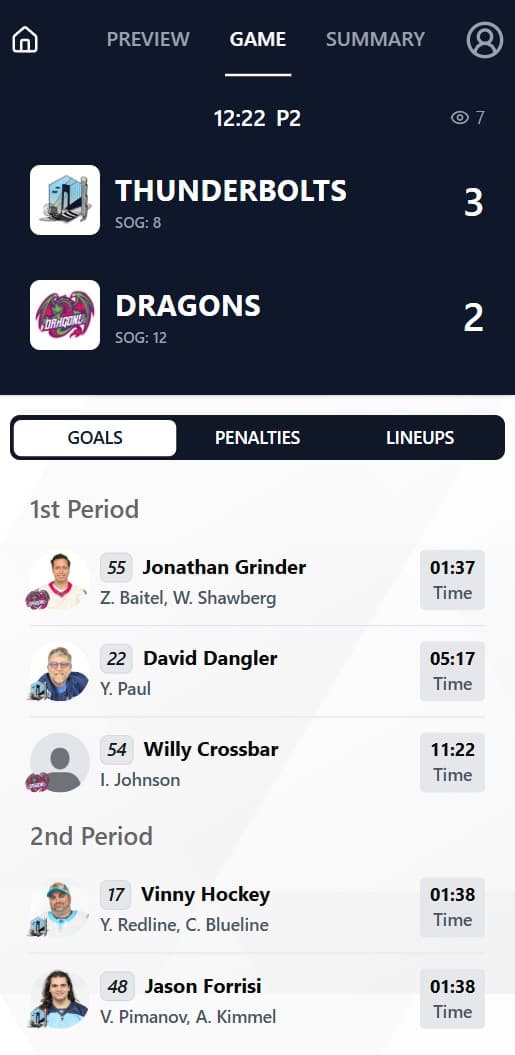
With HockeySync's live scoring, scorekeepers select players from a dropdown instead of writing jersey numbers. Goals, assists, and penalties are recorded with a few taps. The system handles all the math automatically.
Speed: Stats Available Instantly
With paper gamesheets, there's always a delay. Someone has to collect the sheet, transcribe the data, and update the spreadsheet. For many leagues, this means stats are days or even weeks behind.
Digital scorekeeping changes everything. When a goal is recorded, it's immediately reflected in:
- Player statistics and career totals
- Team standings and points
- League leaderboards
- Game summaries visible to everyone
Parents following from home can see goals as they happen. Players can check their updated stats before they leave the rink. There's no waiting, no wondering if the stats are current.
Accessibility: Parents Can Follow From Anywhere
Not every parent can make it to every game. Work schedules, other kids, travel distance—there are lots of reasons why parents might miss a game but still want to know what's happening.
With digital scorekeeping, parents can follow along in real-time from anywhere:
- Live score updates during the game
- Notifications when their child scores or gets an assist
- Full game summary available immediately after
- Season stats accessible anytime
This isn't just convenient—it builds engagement with your league. Parents who feel connected to what's happening are more likely to stay involved and recommend the league to others.
Historical Data: Season-Over-Season Tracking
Paper gamesheets are difficult to archive and almost impossible to analyze. If you want to look up a player's stats from two seasons ago, good luck finding that binder full of photocopies.
Digital systems automatically preserve everything:
- Complete historical records for every player
- Season-over-season comparisons
- All-time league leaders and records
- Individual game logs going back years
This matters for player development tracking, award nominations, and simply giving players a sense of their hockey history. A player who moves up from youth hockey can look back at their stats from every level.
Environmental and Cost Savings
Let's not forget the practical benefits. Paper gamesheets need to be printed, stored, and eventually disposed of. For a league running hundreds of games per season, that adds up.
Digital scoring eliminates:
- Printing costs for gamesheets
- Physical storage requirements
- Time spent organizing and filing paper records
- Environmental impact of paper waste
One tablet or laptop at the scorer's table replaces endless stacks of paper.
Making the Switch
Transitioning from paper to digital scorekeeping is easier than most leagues expect. The biggest concern is usually training scorekeepers, but modern scoring interfaces are designed to be intuitive.
Tips for a smooth transition:
- Start with a training session for scorekeepers before the season
- Have a backup plan for the first few games (paper as fallback)
- Choose a system designed specifically for hockey
- Make sure the interface works well on tablets for rink use
HockeySync's live scoring system was designed with real scorekeepers in mind. The interface is clean, fast, and works on any device. Most scorekeepers are comfortable with it within a single game.
Ready to Go Digital?
Paper gamesheets had their time, but they're holding your league back. Digital scorekeeping is faster, more accurate, and creates a better experience for everyone involved—from administrators to parents to the players themselves.
HockeySync makes the switch easy. Our live scoring system handles everything from goal tracking to penalty management, with stats that update in real-time for the entire league.